








































Engineer:
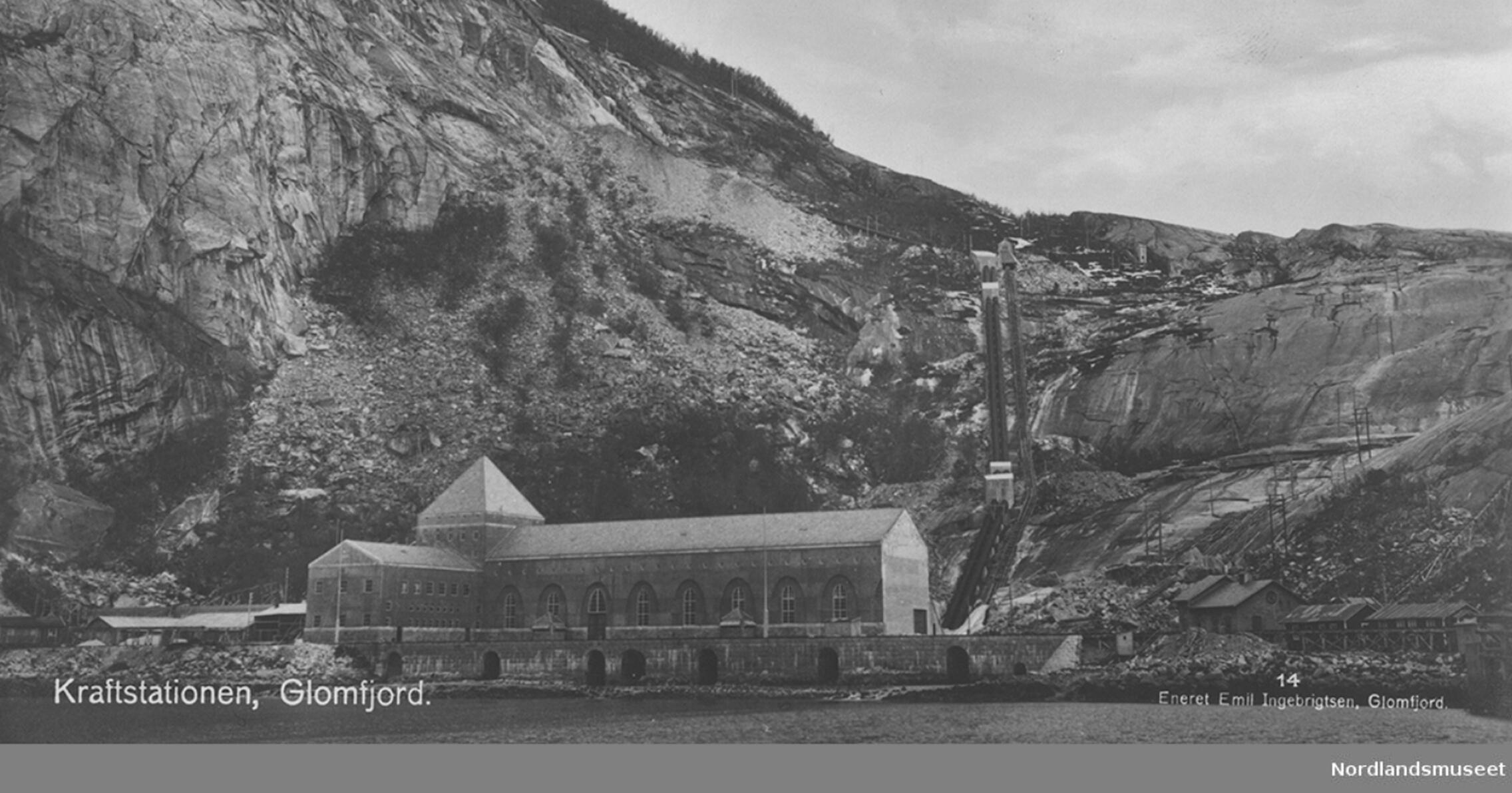
That’s right, the power plant is an engineering masterpiece!
It all began in 1898 when the Lensmann and the church singer in Meløy together bought the rights to use the waterfall. Later they sold the rights to Ragnar Schjølberg in Bodø and Ole Wilhelm Lund, businessman and engineer. They founded the company Glomfjord Aktieselskap..
In the summer of 1912, the newly appointed construction manager Bernt Lund was in Glomen. Surveys in the mountains and construction of barracks and a forge were the first tasks to be undertaken.
Worker:
As always it’s the high and mighty who are talked about. But who built the faxility? Was it them? Of course not. It was us, the working class. While they wore siting inside their warn offices drinking coffee, we climbed up and down the steep mountain with several tens of kg of equipment on our backs. Often with our life at stake.
What about Norin Jørgensen From Neverdal, Daniel Johnsen from Åskardet or Edvard Kundsen from southern Norway? They were taken by an avalanche,
early in the winter of 1912. And they were only the first of countless others who gave their lives for the power plant.
Engineer:
That's regrettable of course, but without these high and mighty there would be no work for anyone.
Anyway, in 1920 the power plant was completed, but already 2 years earlier they had experienced financial difficulties. The power plant was essentially bankrupt, and was sold to the state in 1918 for the record sum of NOK 15 million kr. The purchase was highly controversial, and many doubted that the investment would pay off. However, Prime Minister Gunnar Knutsen was a strong advocate for the purchase and got his way. The purpose was to make money by selling power to the zinc factory that was under construction in Haugvik. In addition, they wanted to get the power plant into Norwegian hands, as the power plant was initially owned by Swedish interests.
Glomfjord power plant became the first state-owned power plant of this size. It is therefore correct to say that Glomfjord power plant is the country's first "state power plant" for industrial purposes.
Worker:
You’re painted a nice picture there. But shouldn't you mention that the zinc factory in Haugvik also went bankrupt and that the state had to buy that as well?
Engineer:
We will talk more about that later.
Worker:
Hehe, how convenient.
Engineer:
Anyway. During the German occupation, the power plant was planned to be expanded and received a total of six aggregates. The station as it stands today was completed in 1949, with the addition of a new administration building that was added later.
After the Svartis power plant came into operation in 1993, only one of the six aggregates is in operation at Fykan.
During the Second World War there were a total of 2 attempts to blow up the power plant. First by aircraft in 1941 and later by commandos in 1942, during the sabotage operation Operation Musketoon.
Worker:
Oh, did you run out of rich men to brag about? Then maybe I can tell the nice people about what happened to Albert and Erling when they worked the night shift at Haugvik in September 1941.
Engineer:
No, I'll tell you about them later!
Worker:
Fine! But I`ll hold you to it!
Subject text: Helge Seim
Screenplay: Helge Seim og Jan Ivar Bårtvedt
Voices: Jan Ivar Bårtvedt og Matias Bjune Pedersen
Editing: Helge Seim
Sources:
- Fagerland, T. E. (1998) – Industristedet Glomfjord: Fra veidemark til kraftsamfunn