











































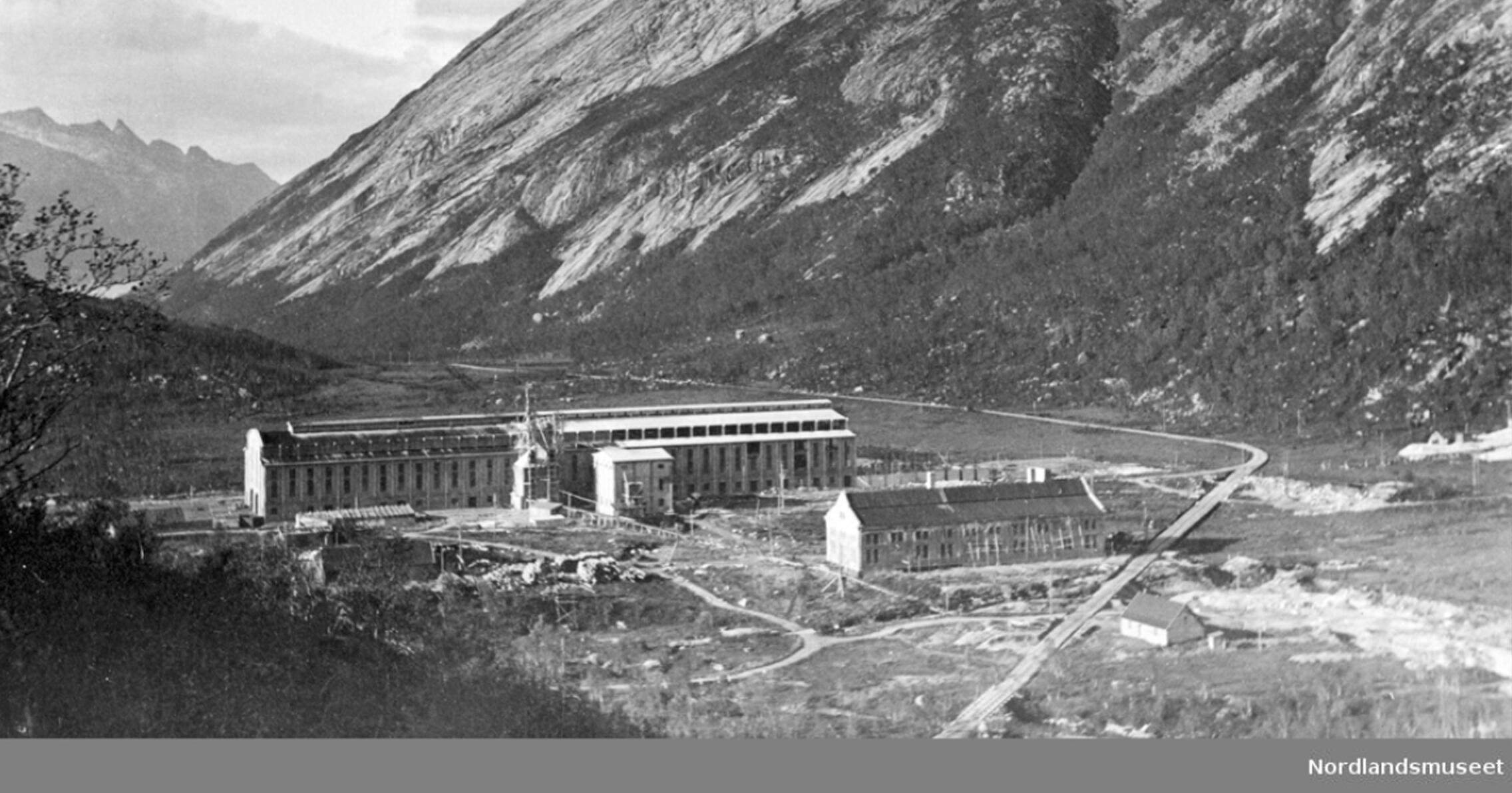

Worker:
Yes yes… You engineers calculated and used nice words, but the truth of the matter is that the calculation was completely wrong. Already in 1924, the price of zinc had become so insignificant that the entire factory went bankrupt. It was so bad that the state bought it for 2,4 million kr. If that hadn’t happened, we bought would be out of work.
Engineer:
Anyway, between 1924-1926 they search for an heir to the zinc factory. The ideas were many; Electric drying of fish, Extraction of salt from sea water, oil from coal, a state fertilizer factory, lectrothermal industry, saltpeter factory and nitrogen factory aimed at the fertilizer industry.
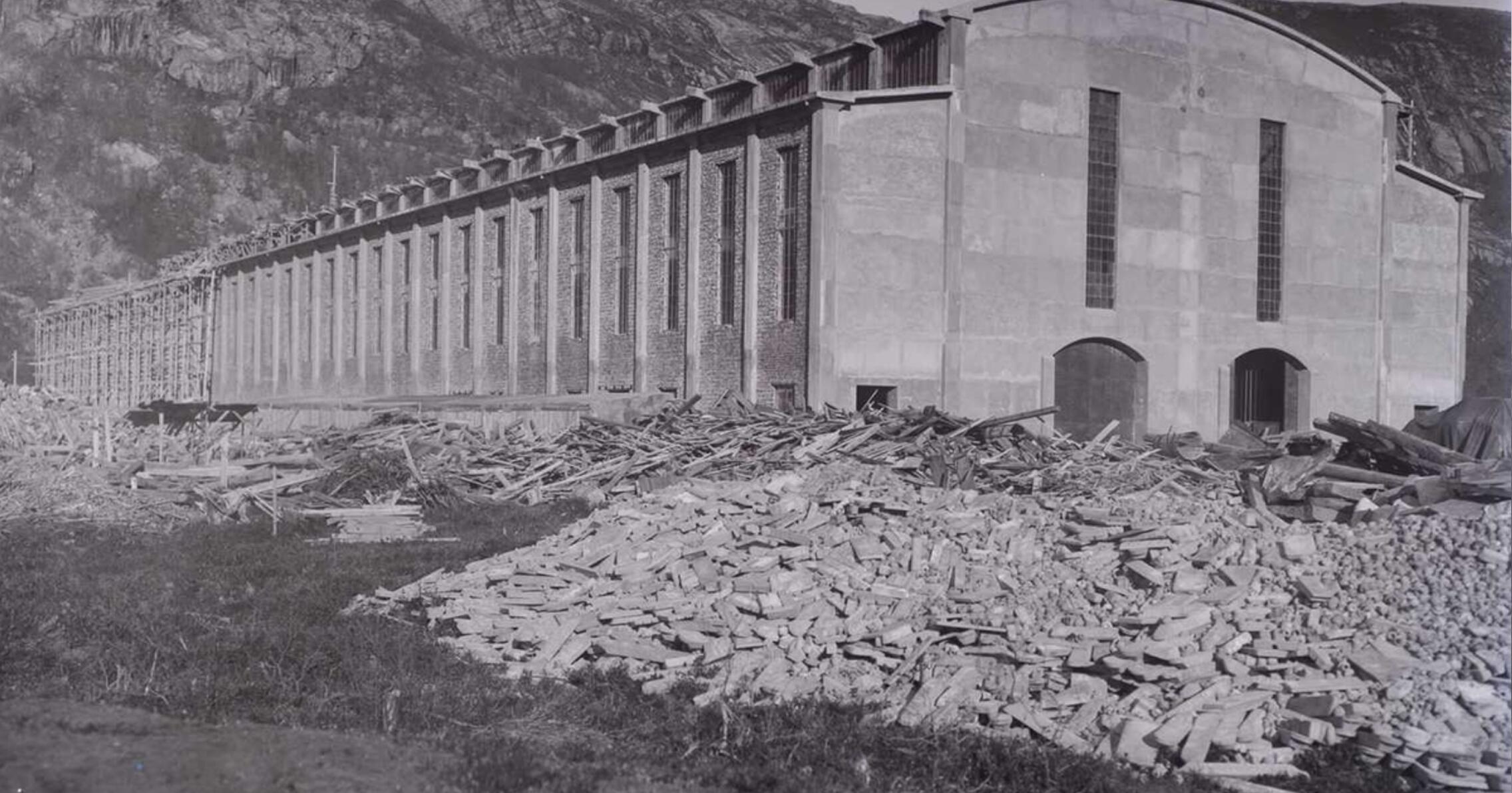
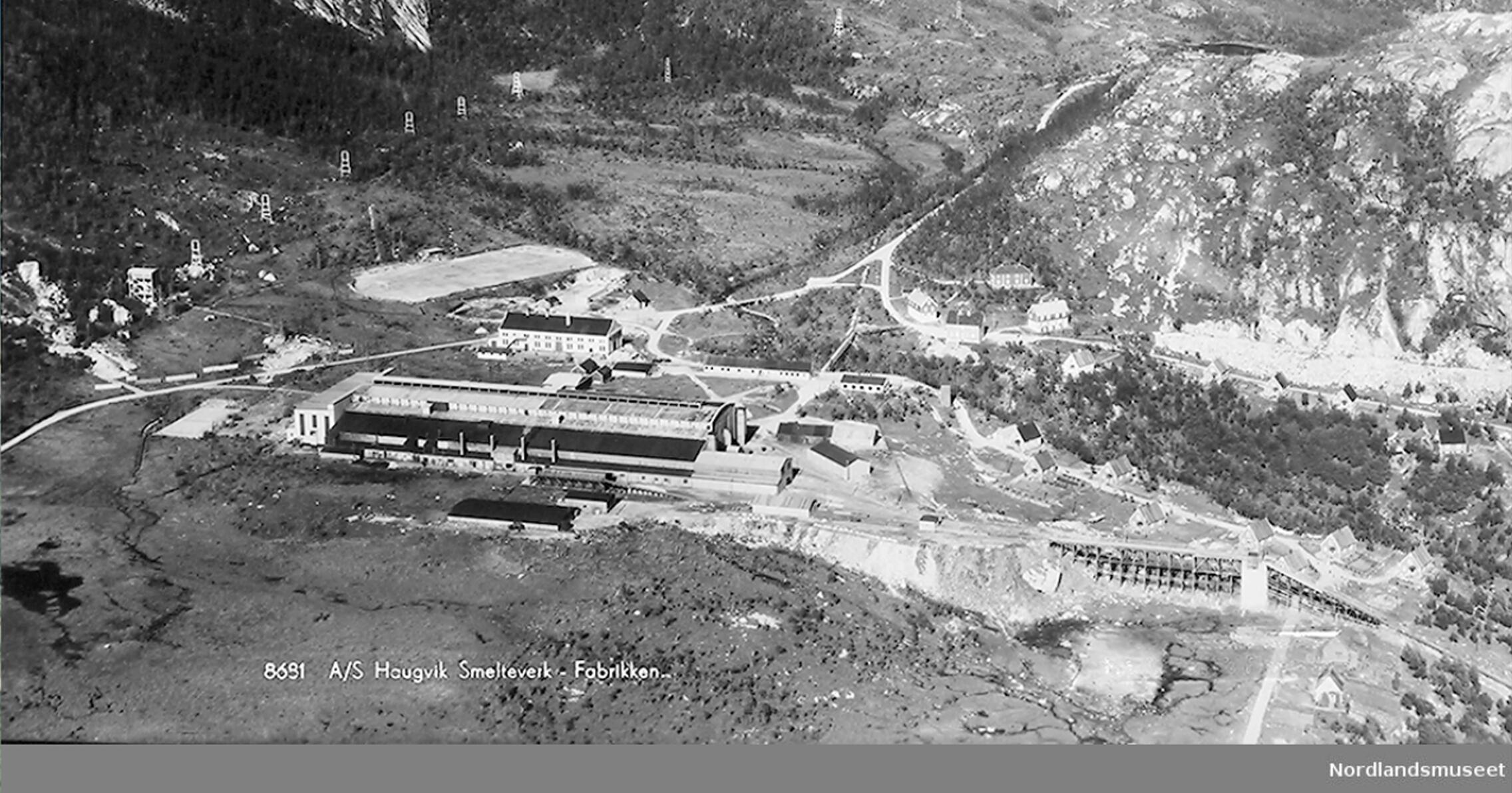
In 1926, the English company Britisk Aluminum Company Limited entered the picture. They opened up the establishment of aluminum production based on waterfall energi. It turned out that several businesses in the industry were behind it, and the operating company Haugvik Smelteverk A/S was formed. In July 1926, an agreement on the lease of power, buildings and facilities was signed, and production began in 1927. In the first years, only about half of the capacity was utilized.
It was only when upgrading and business cycles in the late 1930s created increased demand that the plant's capacity was fully utilized. The operation continued until the outbreak of war in 1940.
It was only when the arms race in the late 1930s created increased demand that the plant's capacity was fully utilized. The operation continued until the outbreak of second world war in 1940.
Worker:
Yes, war is hell, but it isn’t all bad. Now everyone needed aluminum and that meant mor work for us here in Glomfjord. After the German invasion, the local leaders lost contact with the owners in England. But work continued under German leadership. They called themselves Nordag and they had tremendous ambition. They upgraded the capacity both here and at the power plant.
Engineer:
This increased activity did not go unnoticed in England. Glomfjord was attacked twice by the Allies.
Worker:
Yep, and once again it’s the working class who has to pick up the tab. We lost 2 men at Haugvik when the bomb rained in 1941 and these British commandos scaring the living hell out of the guys at the power plant in 1942. Not to mention Ellingsen up in the fykan valley. And of course, there was also a complete stoppage in work.
Engineer:
Although the sabotage in 1942 was successful, it only took 3 months before power production was up and running again, but no more aluminum is ever produced in Glomfjord. The reason was a lack of raw materials.
Worker:
Didn't I think so. Yet again it was you people that mucked it up again!
Engineer:
No, it was because of the war! The war hampered the supply of raw materials. This cannot be predicted. Now I must ask you to hold your tongue and stop all these needless interruptions!
Engineer:
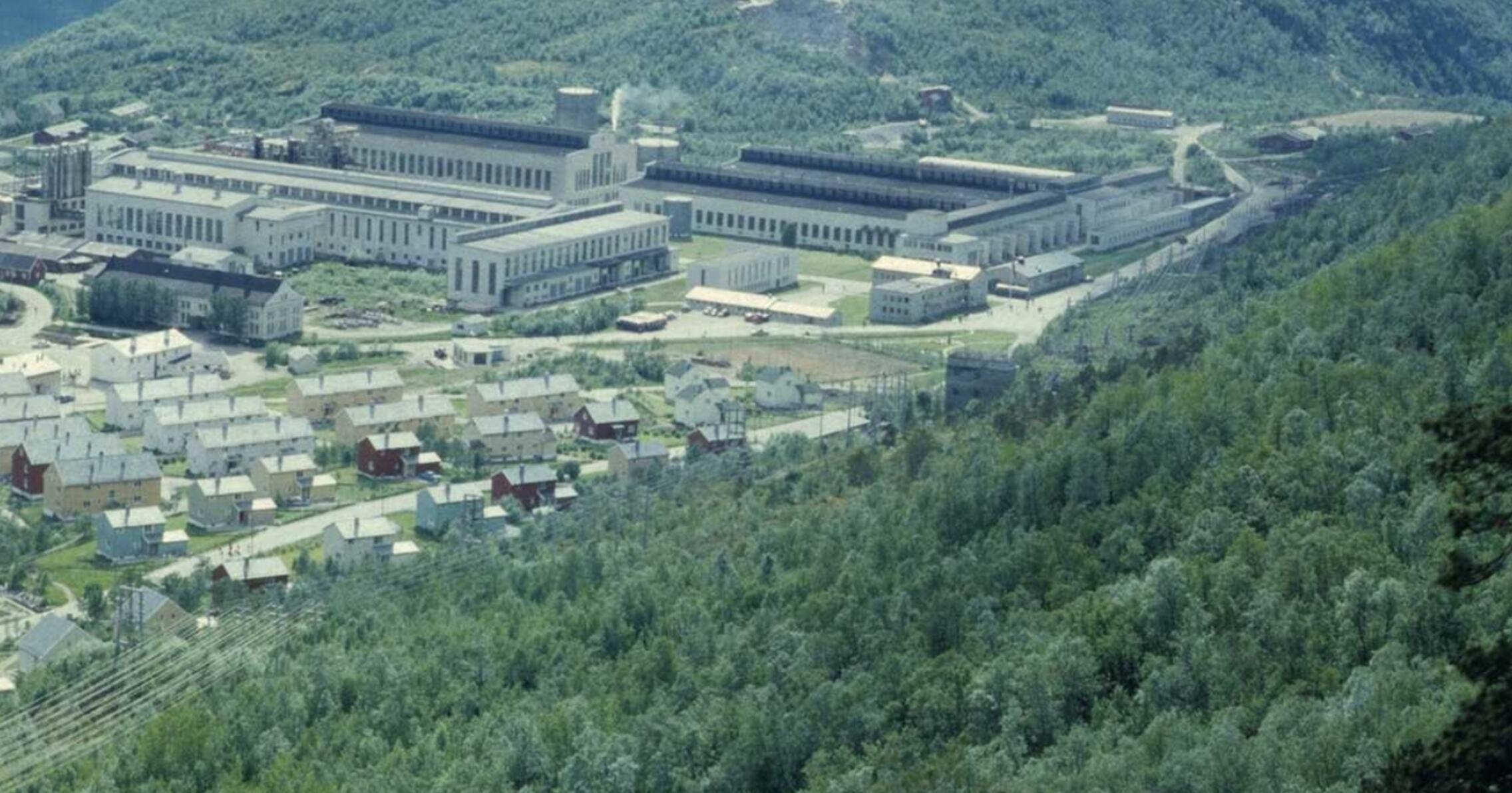
Anyway, after the war, a new search begins for an heir to the Glomfjord industrial site. On 10 July, an agreement was reached with Hydro, and construction work began already the same month.
1,500 men were put to work with an ammonia factory for fertilizer production. Barely two years later, the factory could be put into operation, partly built on the foundations of the aluminum plans begun by the Germans.
Worker:
The years with Hydro was a great time in Glomfjord. They took care of everything.
Engineer:
Didn't I say you shouldn't interrupt.... What? Did you say it was great? Well yes you’re correct..
Engineer:
Ammonia production ushered in a new era in Glomfjord and Hydro's history. Production was divided between Glomfjord and Herøya at Porsgrunn. Three special ships transported ammonia the 1,500 kilometers. Such a long transport of ammonia in large pressure tanks was a pioneering effort that attracted international attention. The ships operated in shuttle traffic for nearly 25 years without incident.
After six years as a supplier of raw materials, in 1955 Glomfjord got its own factories for the production of nitric acid and commercial fertiliser. The ammonia could be refined on site, with supply from outside as capacity increased. Glomfjord is today one of the busiest ports in Northern Norway. All raw materials for fertilizer production are imported, mainly from Eastern Europe.
Fertilizer production in Glomfjord developed strong professional environments. When the ammonia factory was closed in 1993, an extensive restructuring began. In 2004, Hydro's fertilizer division was spun off into the company YARA, which today is a world leader in fertilizer production.
Worker:
Are you done bragging so we can get back to work? Well, unless this is what you engineers call work.
Engineer:
That’s it! I`ve had enough! The truth of the matter is that some are blessed with a strong physique and others with a creative mind. Someone has to think the large thoughts that create opportunities for others who are unable to think as ambitiously.
Worker:
Creative mind!? Utter nonsense!
Stand around with your hands in your pockets and talk while you grab money, that's what you do.
While we guys who actually do the work have to struggle for every penny. You are all delusional and lazy.
Engineer:
The Audacity!
Where would you be if it weren't for us who think the big thoughts? Someone has to do it to create jobs here in the periphery!
Worker:
Big thoughts!? HA! The only big thoughts I see here is the once you have about yourself. And these workplaces you speak so warmly about, are so unstable that half of it could be enough.
Subject text: Helge Seim
Screenplay: Helge Seim og Jan Ivar Bårtvedt
Voices: Jan Ivar Bårtvedt og Matias Bjune Pedersen
Editing: Helge Seim
Source:
- Fagerland, T. E. (1998) – Industristedet Glomfjord: Fra veidemark til kraftsamfunn