










































Engineer:
In 1916, the property was bought by “Glomfjord Aktieselskap”. After this, Setvik was considered an industrial area. Beyond the 20s, “Glomfjord Aktieselskap” experienced financial difficulties. The Norwegian state then bought both the power plant and the factory area. Setvik thus passed into state ownership.
Engineer:
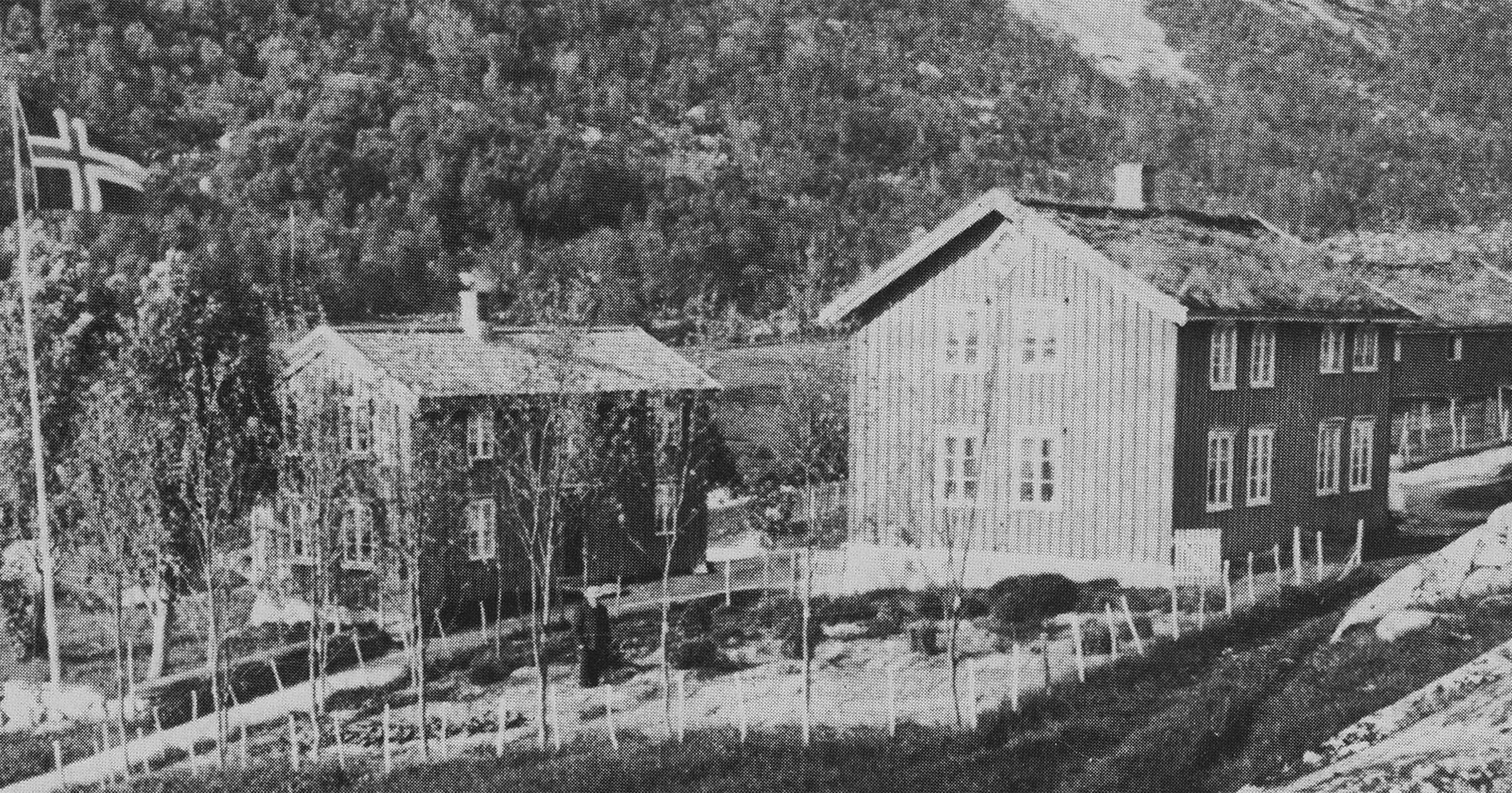
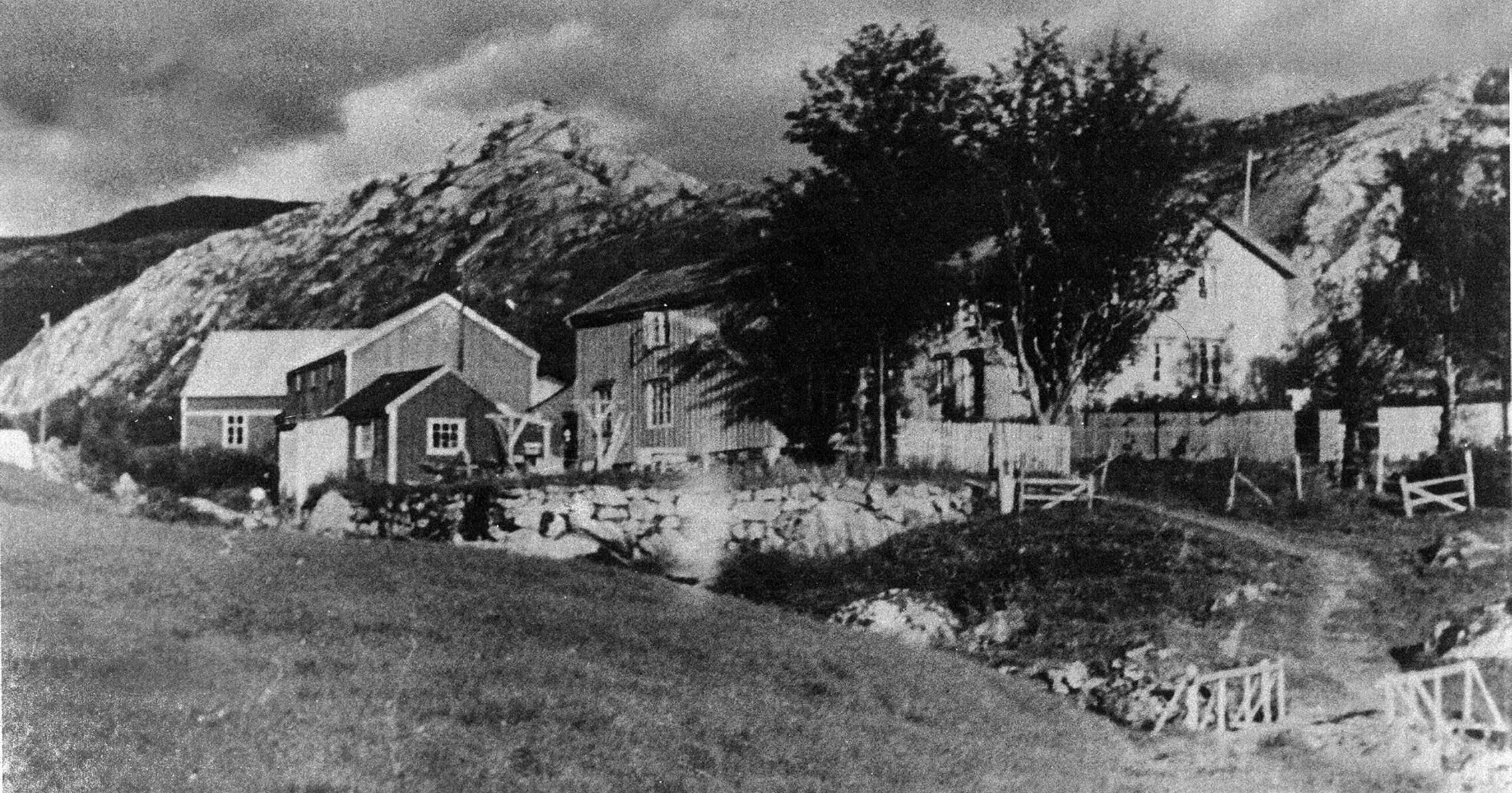
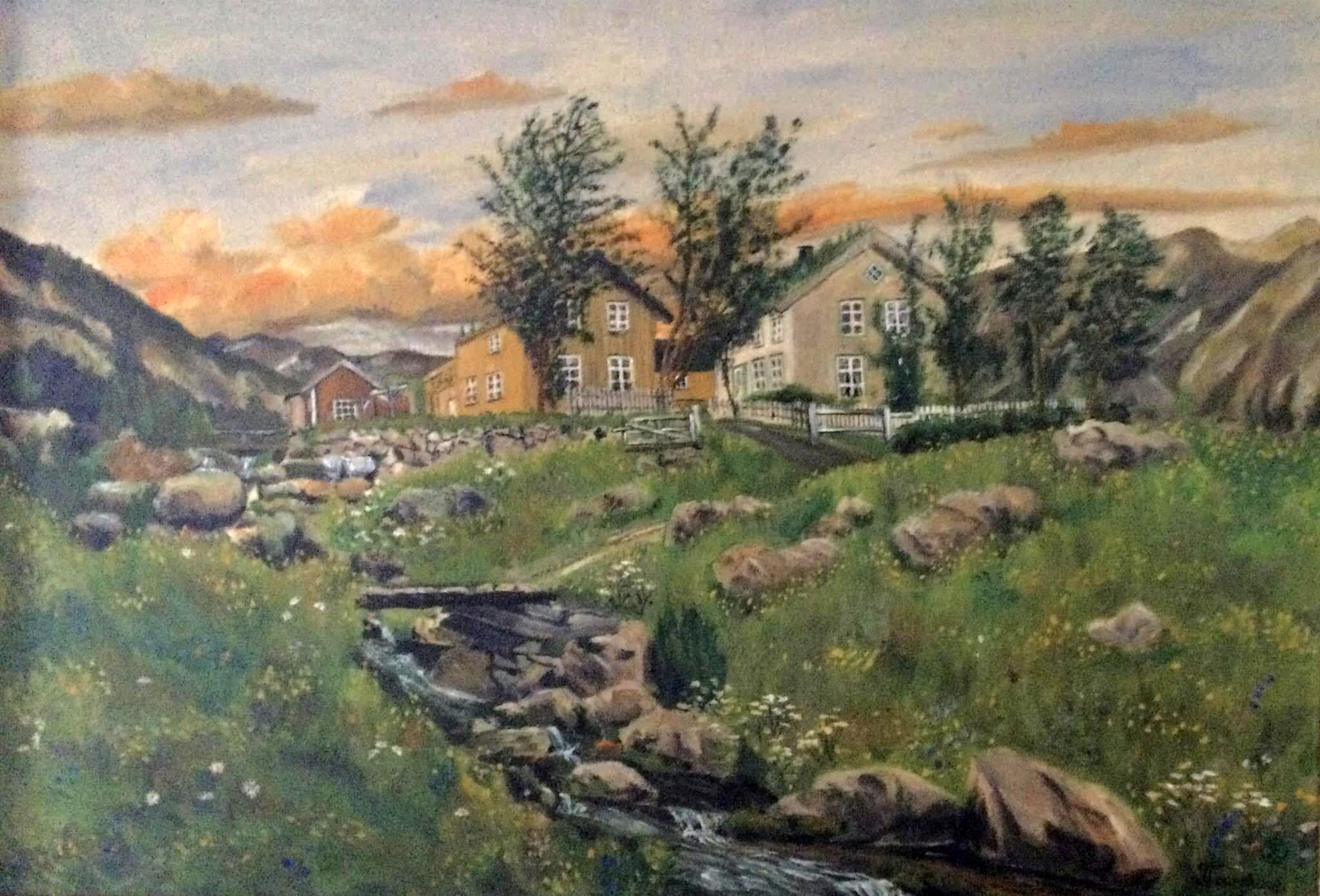
In 1923, Odinna Katinka and Johan Andreas Pettersen were offered to rent Setvik farm. On the farm there were two residential buildings, a barn and a summer barn. Johan considered this too much to own alone and got his brother, Petter Kristoffer Pettersen, involved in the operation.
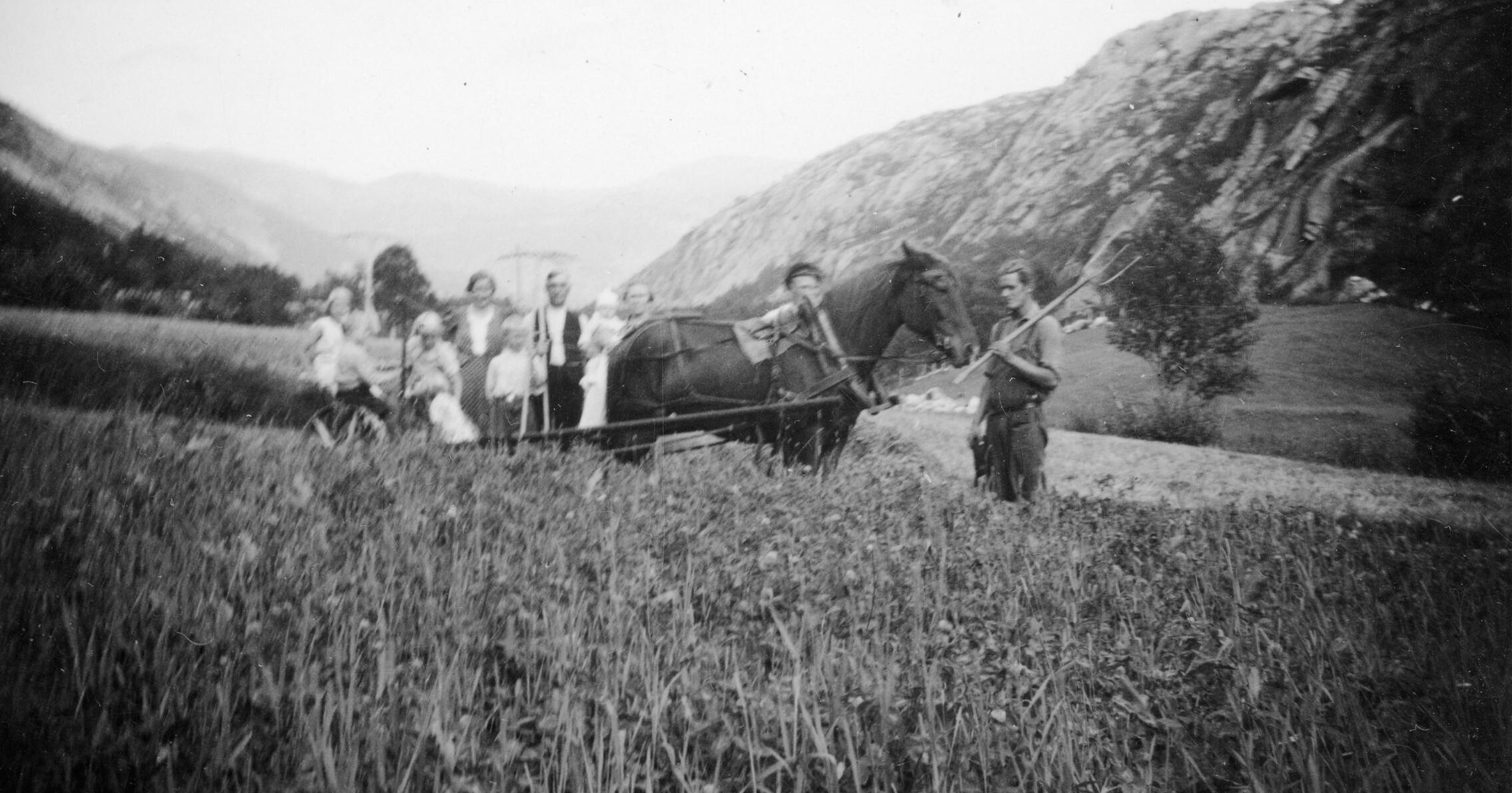
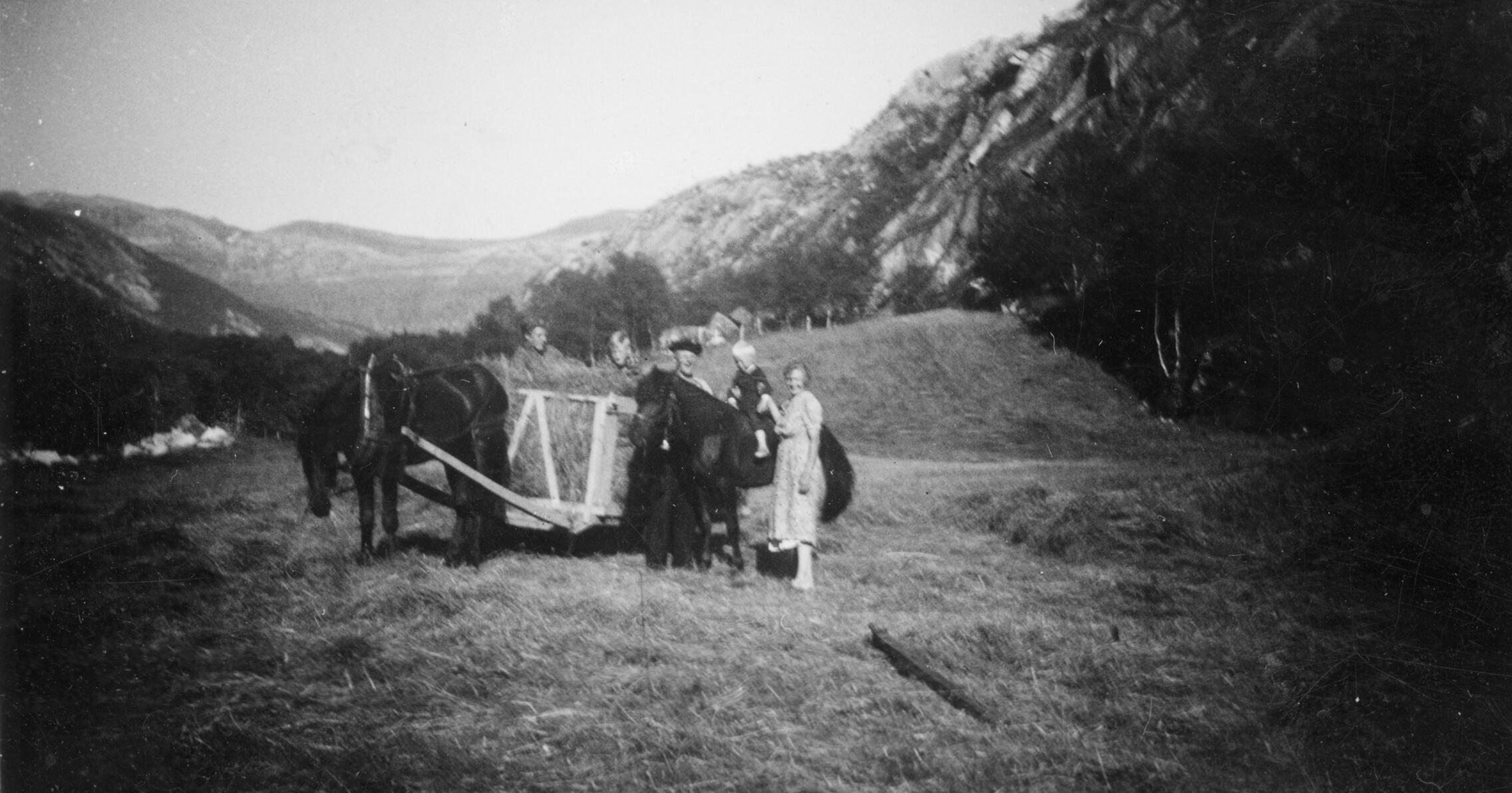
In addition to the farm, Johan and Petter drove transport with three horses for Glomfjord Kraftverk and Haugvik Smelteverk AS. Johan also got work in transport at the factory. In 1932, Petter took over the horse transport alone, at the same time he bought his first lorry. The operation of the farm was initially shared, but the land was eventually divided and Petter built a new barn for his livestock. The road down from the main road separated the properties. Johan owned the land from the road down towards the sea, and Petter owned the land from the road in towards Setvik valley. They each had 3-4 cows and some younger animals, besides the horses.
In 1931-32, the two brothers built a small residential house near the road, for their parents, Hanna and Julius Kristian. They also gave them a piece of land and a cow, so they had milk and meat.
After Johan died in 1935, life became somewhat harder for Odinna and the 6 children. But they still managed well.
Engineer:
Just before the war broke out in 1940, electricity was installed in Setvika. It didn't take long before the Germans came to Meloy. They wanted to optimize the production of aluminum in Glomfjord. To protect the industry, both trenches and anti-aircraft guns were eventually built at Setvikhågen. To ensure permanent staffing, barracks were also built. Beyond the war, it gradually became more difficult to provide the soldiers with proper food, so a pig barn was built in the valley. It became Odinna's task to look after the pigs. It was important to have pork as a supplement to the crisis-oriented food for the soldiers. You can still see some remains of the pig barn.
Setvik farm was vacated approx. 1951-52. The power plant later sold all the buildings for demolition/clearing. The "Petter-Setvik house" was set up in Våtvika and moved into in the summer of 1964.
Worker:
hark….
Engineer
Oh, what is it now then? I mentioned all their names and what they worked on. I even told them about negative conditions with the industry.
What in heaven's name do you want!!? Was it a unionized mouse in the wall perhaps, or a special cow that alone fed the whole of Glomfjord with milk and butter!?
Worker:
What? Oh, no. I just had to clear my throat. But since you ask, I can point out that the reason Johan died was as a result of blood poisoning from a wound he got while bundling the sack in the factory.
Engineer:
That is of course somewhat unfortunate, but accidents do happen. And as far as I can remember, the Director applied to the National Insurance Agency and arranged for the family to be compensated!
Worker:
Yes, I remember that. That's why I didn't say anything..
Engineer:
Ohh….give me strength.
Subject text: Helge Seim
Screenplay: Helge Seim and Jan Ivar Bårtvedt
Voices: Jan Ivar Bårtvedt og Mathias Asplund Nyhagen
Editing: Helge seim
Music and Soundeffect: freesound.org
Source:
- Pettersen K. (2002) Årbok nr. 18: Setvik gård Meløy Historielag