












































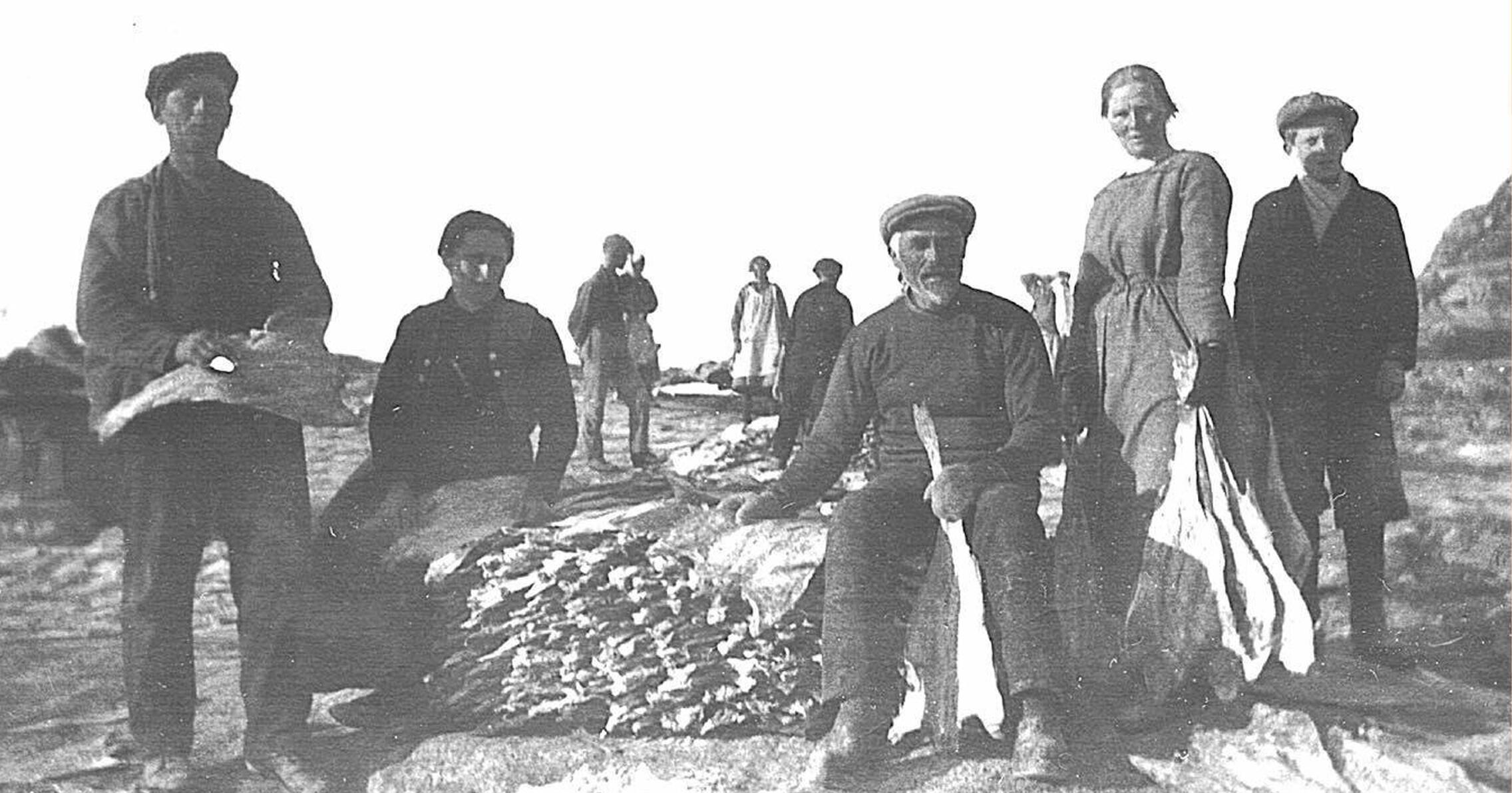
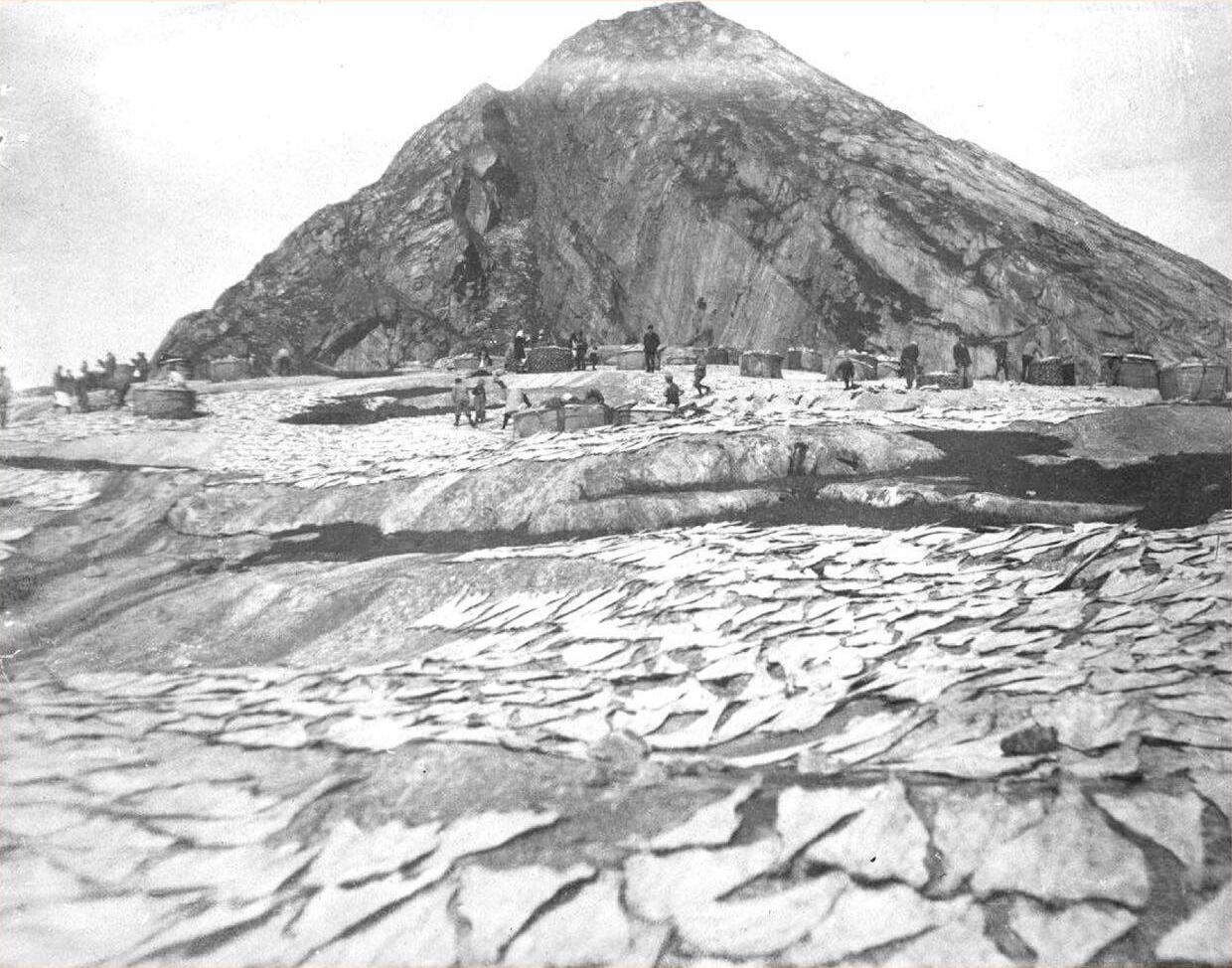

When the fish arrived here in Bolga from Lofoten in the transition between April and May, it was already both split and salted. The vessels were moored with the "Fartøyskjæret", and the fish were transported ashore in smaller boats, washed on the seashore and laid in layers with a pointed "hat" on top.
When the weather was favorable for drying, the fish were laid out on the rocks. In case of unsafe weather, such as rain or bright sun, the fish were collected together and placed in piles. When the weather improved, it was put outside again. This continued until the fish was dry enough. It was then loaded back into the vessels and sailed south to Kristiansund or Ålesund for packing and export.
The first place where fish was dried was on Bortherholmen. But since the rough weather made it dangerous for vessels and there was little rock for drying, it was eventually moved here, to what we today call “Klippfiskbergan”.
The proximity to Bolga and its many islands meant that there was a good supply of labour. It was mostly women and children, but also some men who showed up for this kind of work. To summon workers, a white flag was raised on top of Bursøya. This was visible at Helmine's house in Nystuen. When she saw it, she also raised a white flag on Stuhågen, and the whole area was then alerted.
Clipfish work was a very important source of income for many families, and it was common for all family members to give the main breadwinner what they had earned. In 1912, adults received 3 kroner for a full day's work, while children had to make do with 50 øre. This sum gradually increased and by the time we reach 1920, a whole family could earn as much as 15 kroner in a day. It must have helped a lot in the tight economy that was common at the time.
There was a lot of activity here at times. In some years, as much as 120,000 fish were dried. This meant that several vessel arrived in one season. Among those who have dried fish here were Teodor Eiken from Hardanger, Ludvig Sørensen from Nusfjord and Leanger from Gildeskål.
It is said that everything has its time in the sun, and by the mid-1930s the klipfish era on Bolga was over. Nevertheless, the name remained and works as a reminder of a time when this was a busy place.
Subject text: Per Swensen, Anne Marie Johnsen, Tone Lise Lyngeng
Screenplay: Helge Seim
Voices: Tone Lise Lyngeng
Editing: Helge Seim
Soundrecordings: LydBerger Sunflower Studios.
Music and Soundeffect: freesound.org
Source:
- Fygle S. (1991) Fiskerihistorie for Meløy 1850 - 1991
- Moe K. (1981) Gård og grend i Meløy, bind 1
- Interveiw with older people before 1980