












































They say they have a long history on Meløya. Phew! Haven’t we all?
Like here on Grønøy for instance
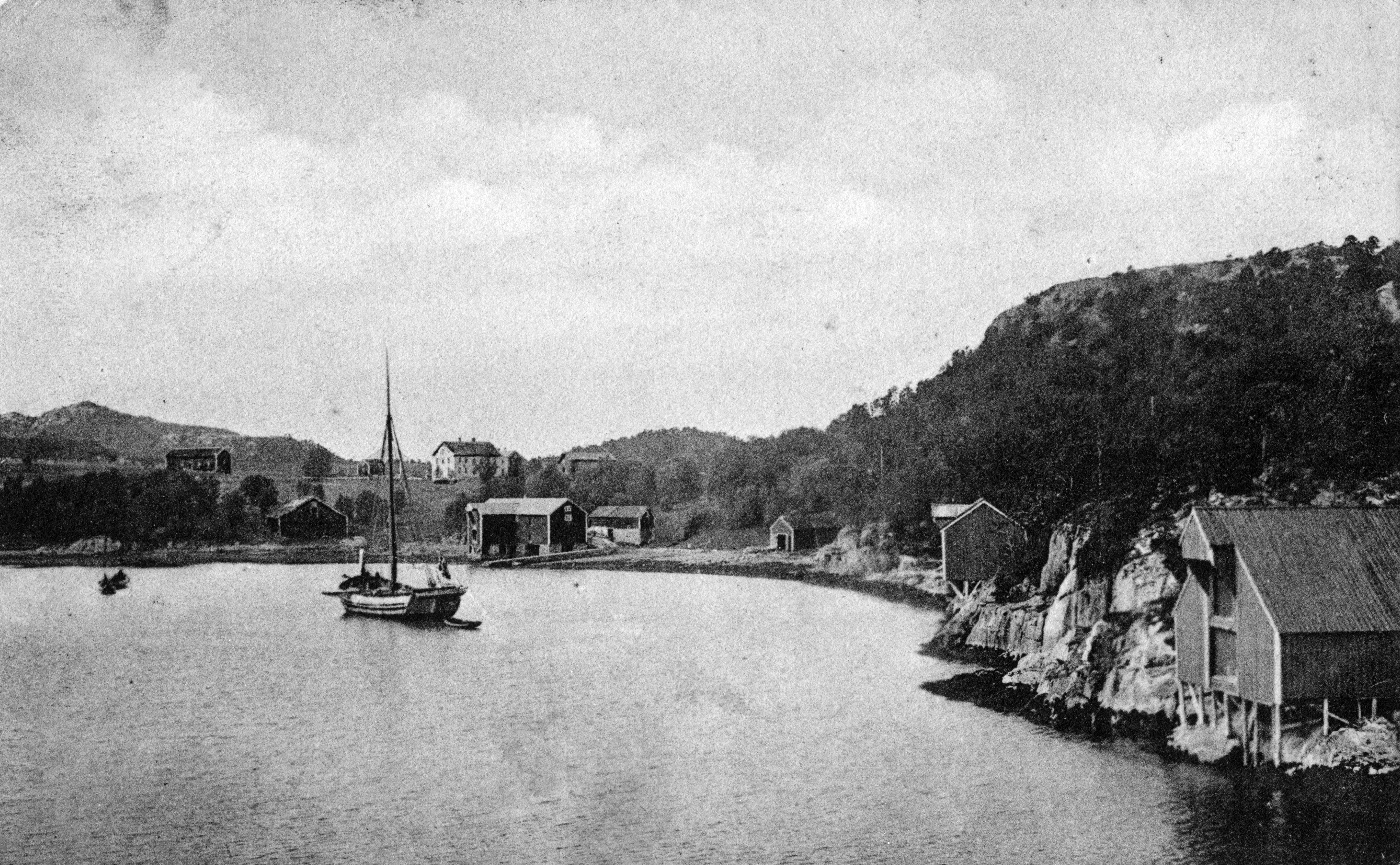
Admittedly, Christen Albrecht Angell did not get an innkeeper's license on Grønøy until 1788, but by then trade had already been carried on for a long time. At the census in 1701, there was full activity on Grønøy. The owner was the 74-year-old Trondhjem resident Jens, who had been trading and shipping on Grønøy for a long time.
Christen Albrecht Angell was married to his cousin Maren Hvid Blix and had 10 children with her. The trading post grew and at the turn of the century Christen had 2 transport ships and employed 11 people. In 1824, his son Hans Christensen Angell, takes over. Hans has 6 children, but none of them wants to take over the family business form their father.
In 1844 Grønøy trading post was thus sold by auction to Ole Augustinussen from Nesna. He was married to Oline Zahl, but they had no children. So when Ole died barely 50 years old, the widow was left with the business.
In 1860, the area was bought by Anders Meyer for a whopping 3,500 spesidaler. This was a time when an ordinary residential house was valued at 50-75 spesidaler. That really says it all.
In addition, Anders Meyer had to pay a fee for the madam and housemaid Anne Heide. The corps scheme was a kind of pension scheme. This fee was a kind of pension scheme. It was established when a child or others took over ownership of the land. The award gave the former owners fixed benefits in kind or money.
Anders was the brother of the fabled L.A. Meyer at Mo i Rana. Lars Aagaard, which was his real name, eventually built up a company that was to become one of the largest companies in the entire region.
Even to this day, one remembers the saying: All the crap the world owns, can be bought at L.A. Meyer.
Anders, like his brother, was a competent business man and most of the buildings at the trading post were built in his time. Only 5 years after the purchase, there were 11 servants on the farm and a large operation both on land and at sea.
In 1899, his son Fredrik Meyer, takes over the business of Grønøy Trading post. Just 3 years after this, Fredrik went into politics. And just 6 years after this he was elected mayor. He was not a greatest of politicians, but he felt it was his civil duty.
His greatest accomplishment in politics was providing Meløy with supplies during the First World War
As you know, Grønøy is very well situated in the shipping lane, so it was even predetermined by nature to be a melting point for travelers. The steamships also had port here. And from 1912 the Hurtigruta actually docked here 6 times a week. The depth conditions off the trading post were not sufficient for large ships, so steamboats docked at Jektvika. But then Sigurd Bernhoft went ahead and built a deep-water quay at Ørnes and thus stole Hurtigruta from us. After this, more and more were moved, and today it is Ørnes that is the central hub, and Grønøya has become an outlying area.
In 1939, Grønøy trading post was inherited by Fredrik Meyer, who was named after his father. The golden age of this trading posts was over. The owners had managed to become the new elite in Northern Norway, but now they had to fight if they wanted to their position.
One of the tasks of the owners of the trading post was shop operations. Nevertheless, it should be mentioned that for most places this was only a small secondary income. The big money came from fishery in Lofoten.
On this point Grønøy differed slightly from the others. In the shop that remained on the south side of the island, there was activity right up to modern times. Lots of small items were sold here. Some even stocked up with equipment for the Lofoten fishing. Some fish was bought, but it was not from Lofoten. The fish came from a fishing village called Valvær approximately 10 nautical miles west of Bolga.
The trading post also had a speedboat of 36 feet with a 20hp engine, which was used as a shuttle. Imagine owning such a large and beautiful boat, going fishing would be like a dream.
In 1974, Fredrik (the younger) transferred the deed for Grønøy to his son Thor. The farm was then separated from the business and run by Thor's brother, who also went by the name Fredrik Meyer.
The old main building on the farm dates from 1890 and stands there to this day. It was built after a major fire in 1887 which destroyed most of the buildings. With its simple empire facade, it is a beautiful and venerable building.
And let me tell you. Of all the places I have traveled in my time as a fisherman, Grønnøy is the most beautiful. I truly mean that.
Subject text: Helge Seim
Screenplay: Helge Seim og Jan Ivar Bårtvedt
Voices: Jan Ivar Bårtvedt
Editing: Helge seim
Music and Soundeffect: freesound.org
Sources:
- Swensen. (1990) Årbok nr. 6: Fredrik Meyer Meløy kommunes tredje ordfører Meløy Historielag
- Moe K. (1981) Gård og grend i Meløy
- Ytreberg N.A.(1942) Nordlandske handelssteder. Virke,hverdag, reiseliv, fest