












































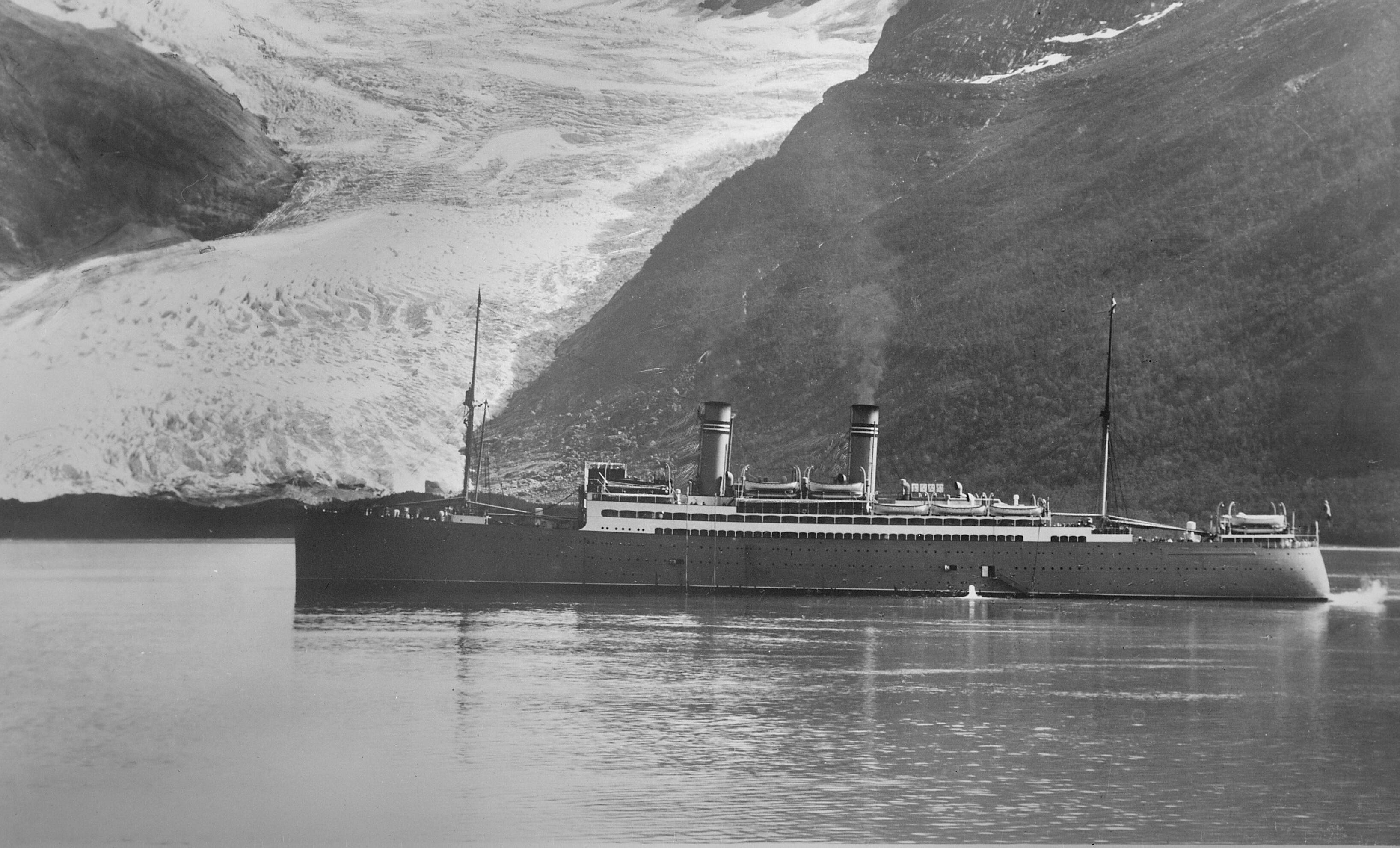

Once upon a time, I was a home for hunters and Sámi reindeer herders. They were so familiar with my body, that they could cross me on foot whenever needed. The Sámi people also served as glacier guides for the explorers who came to the Arctic landscapes in the north.
In the early 1880s, the Sámi Johan Abrahamsson led the French mountaineer Charles Rabot and his men all over the glacier and deep into Sweden. Later, Fritjof Nansen, Emperor Wilhelm, and many others came to explore the mysteries of the ice.
Today, Engabreen is known as the major attraction, but in the past, Fonndalsbreen was quite popular too. Those who initiated this effort were Ole Jakobsen and Hans Larsen at Svartisen farm in 1892. This continued until 1914 when Hans Larsen's wife, Marianne, passed away. She had served as a sort of hostess, and after her death, none of the other family members manage to fill her shoes.
The focus then shifted to Fonndalen farm. They had gradually started tourism after Adolf Johansen converted the main house into a guesthouse in 1882.
In 1912, for example, there were 20-30 German tourists staying on the farm for several weeks.
Yes, unlike today, tourists back then had plenty of time. It actually wasn't uncommon for tourist ships to be in the fjord for several days.
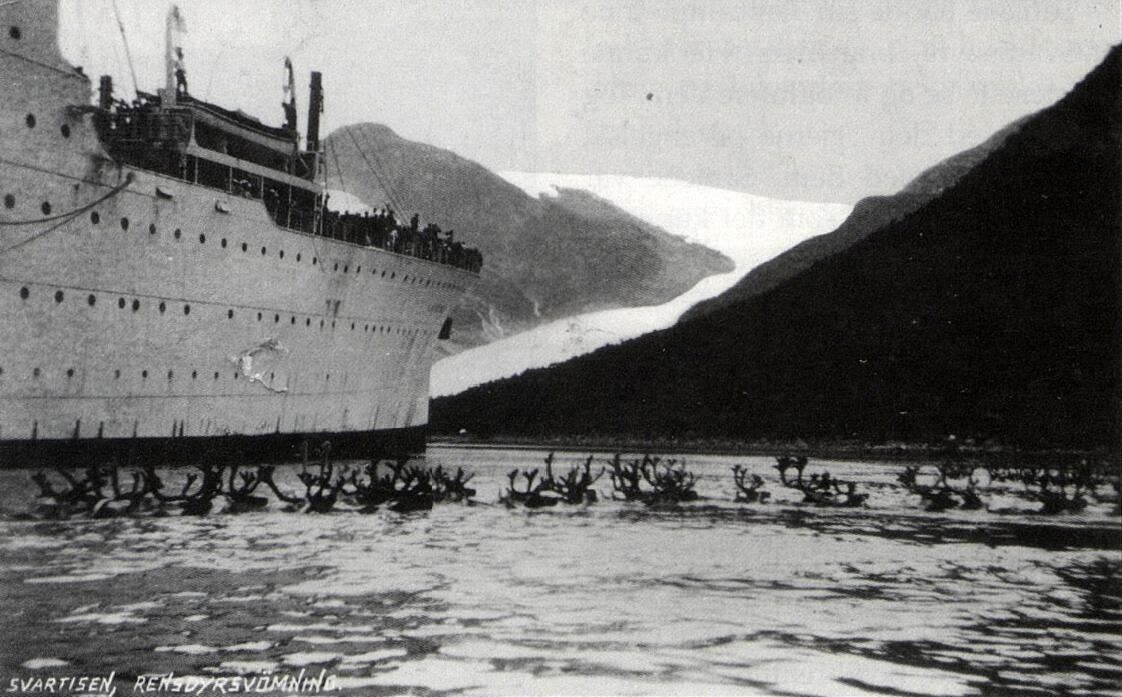
And when the tourist ships had to stay in the fjord for such a long time, they needed things to experience. From 1932 to 1939, one of the attractions was a so-called "reindeer swim."
Tourists hung over the railing as they watched the exotic animals swimming around the ships. It's uncertain who came up with the idea, but it's claimed that the Sámi people themselves were in Oslo and received approval from the old tourism chief Bennett. The main responsibility for the reindeer swimming belonged to the Sámi, Trygve, and Anders Christensen from Hemnesberget (father and son).
That reindeer swimming around tourist ships was a clever idea, worked well, and clearly sparked enthusiasm, there is no doubt. However, this soon came to an end. In the summer of 1940, the war had reached our shores, and tourist traffic received a temporary setback. It also marked the end of reindeer swimming at Svartisen. After the war, attempts were made to revive this attraction, but it was unsuccessful.
By the end of the 1960s, tourism shifted its focus back from Fonndalsbreen to Engabreen. There were several reasons, but the significant retreat of the glacier was probably the most important.
From now on, tourists would once again land at the neighbors, Svartisen farm. Here, they built a new pier and a road from the sea, along the north side of the lake towards Engabreen. And at Svartisen farm, they were pleased that tourists now could take this opportunity to see Engabreen up close.
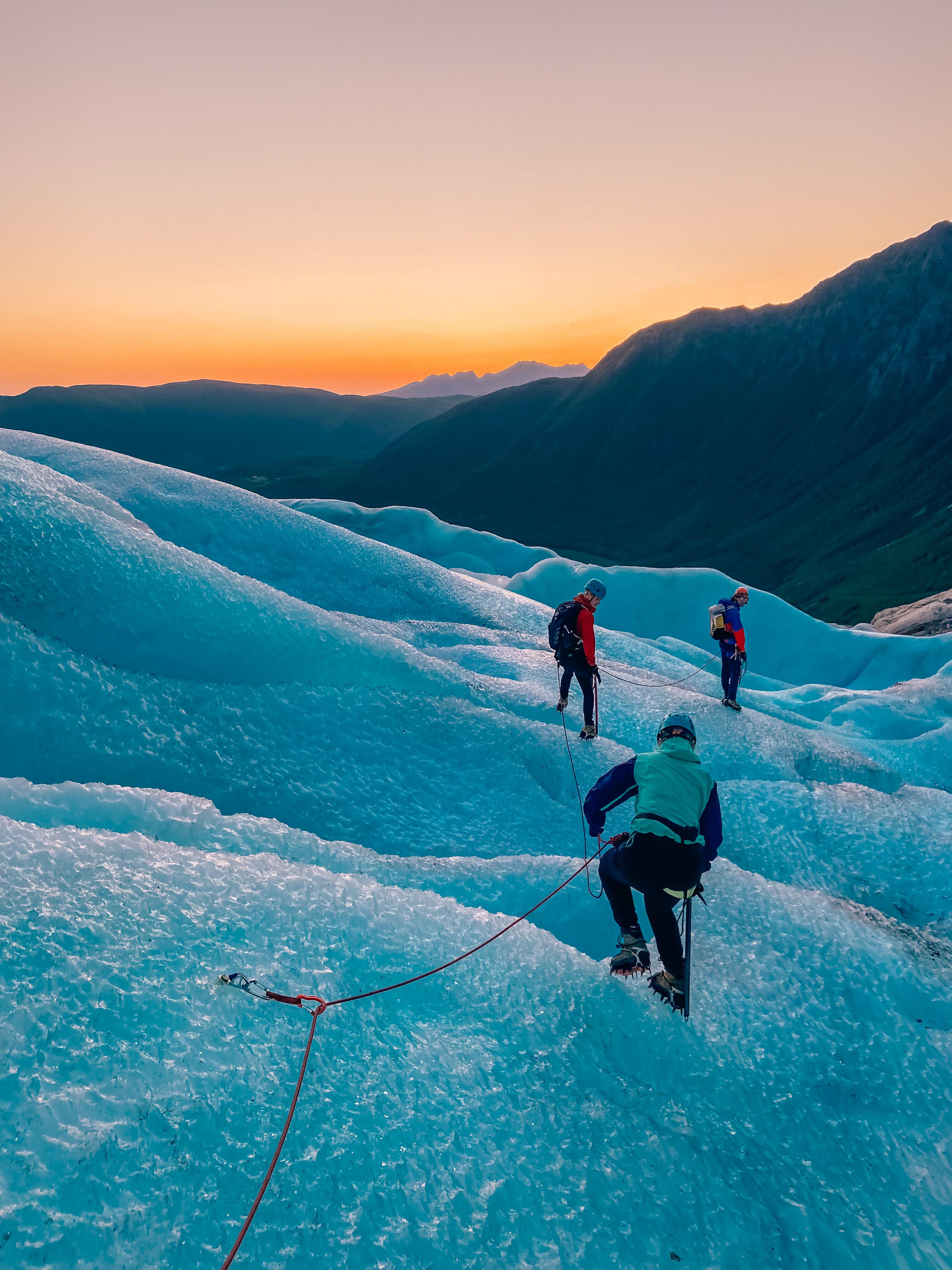
An activity one can still experience is glacier hiking. This is far from a new activity, but it should be noted that safety has become much more crucial in recent years. Tied together with ropes and equipped with crampons on their feet, climbing harness, ice axe, and helmet, the guide takes up to 9 people at the time onto the glacier.
In modern times, knowledge seekers also came in hopes of unraveling the glacier's deepest secrets. They dug 200 meters into the ice, reaching places no man had reach before.
Subject text: Helge Seim
Screenplay: Helge Seim
Voice: Marit Emilie Meidelsen Øvrebø
Editing: Helge seim
Music and Soundeffect: freesound.org
Source:
-Myrvang, A. (2000) – Med Svartisen som Nabo.